
One box,
many bench tools.H-Agent S1 (working name)
A compact touchscreen Linux computer that puts a debug probe, functionally isolated bus adapters and a bus-servo driver in one box. It's designed for your AI to drive: the AI runs on your computer, LAN server or cloud account, and the box powers, flashes and listens to your hardware over Wi-Fi.
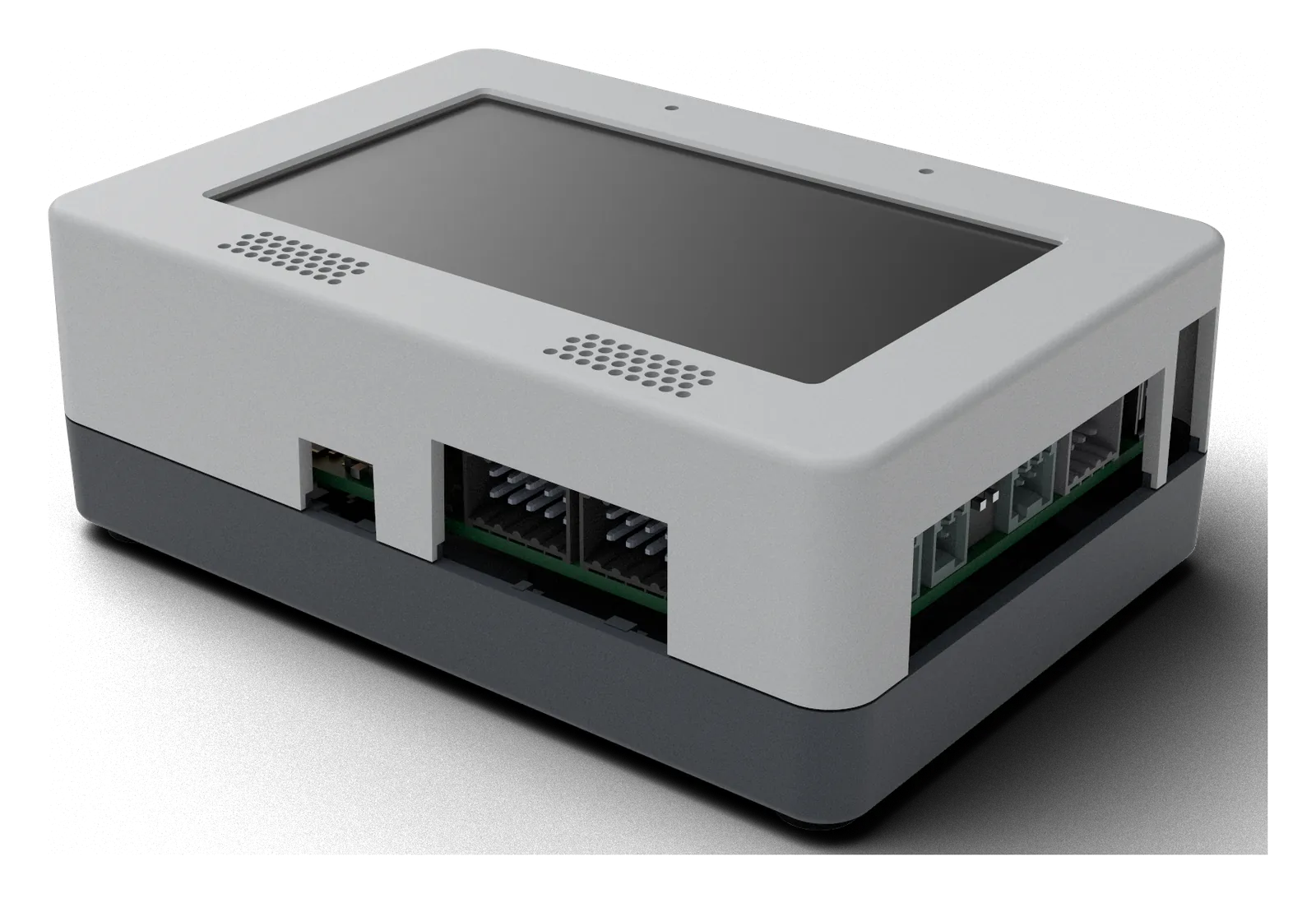 Render
Every side does a job.
Pluggable terminals for the buses, two debug ports at the front, power on the left. Click through each side.
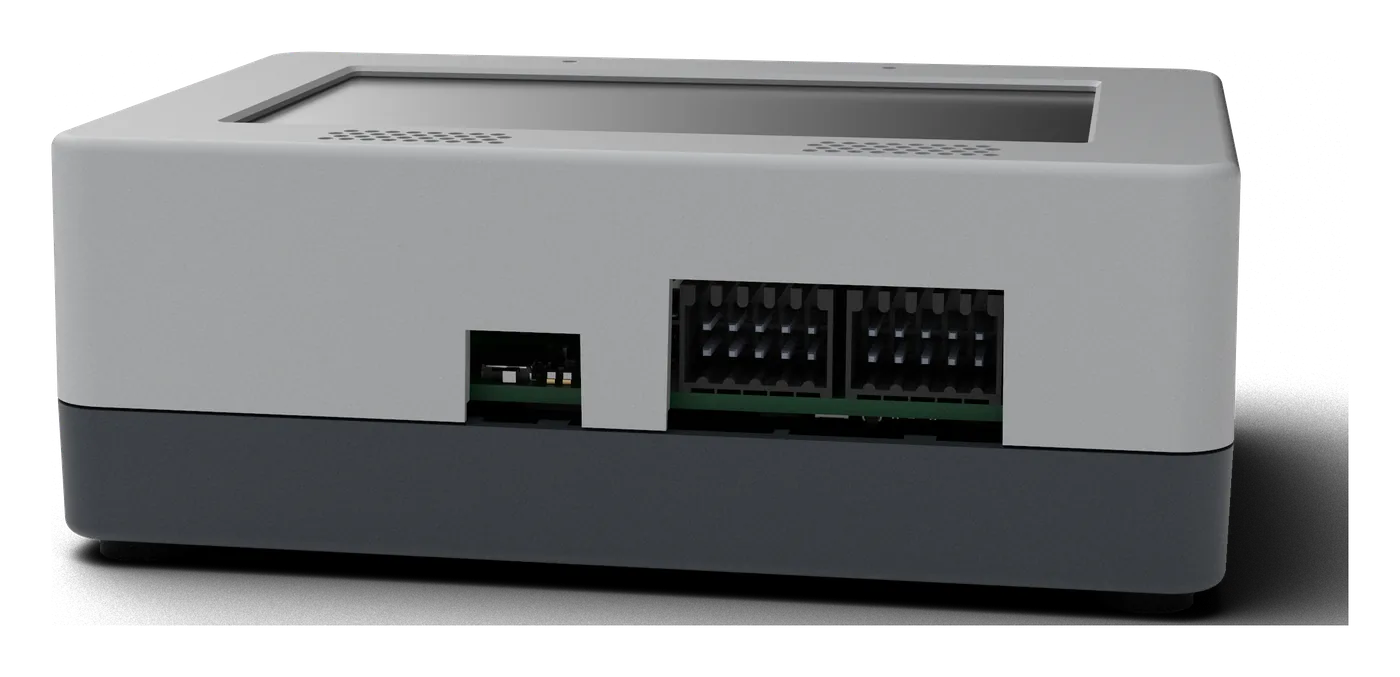 Render
- Debug port AJTAG / SWD / SPI / I2C / UART, switchable 3.3 V or 5 V target power with current sensing. Shared with the servo port.
- Debug port BSame protocols and target power, always available for sensors or a second target.
- USB-C mode switchSelects console or service mode for the USB-C port on the left side.
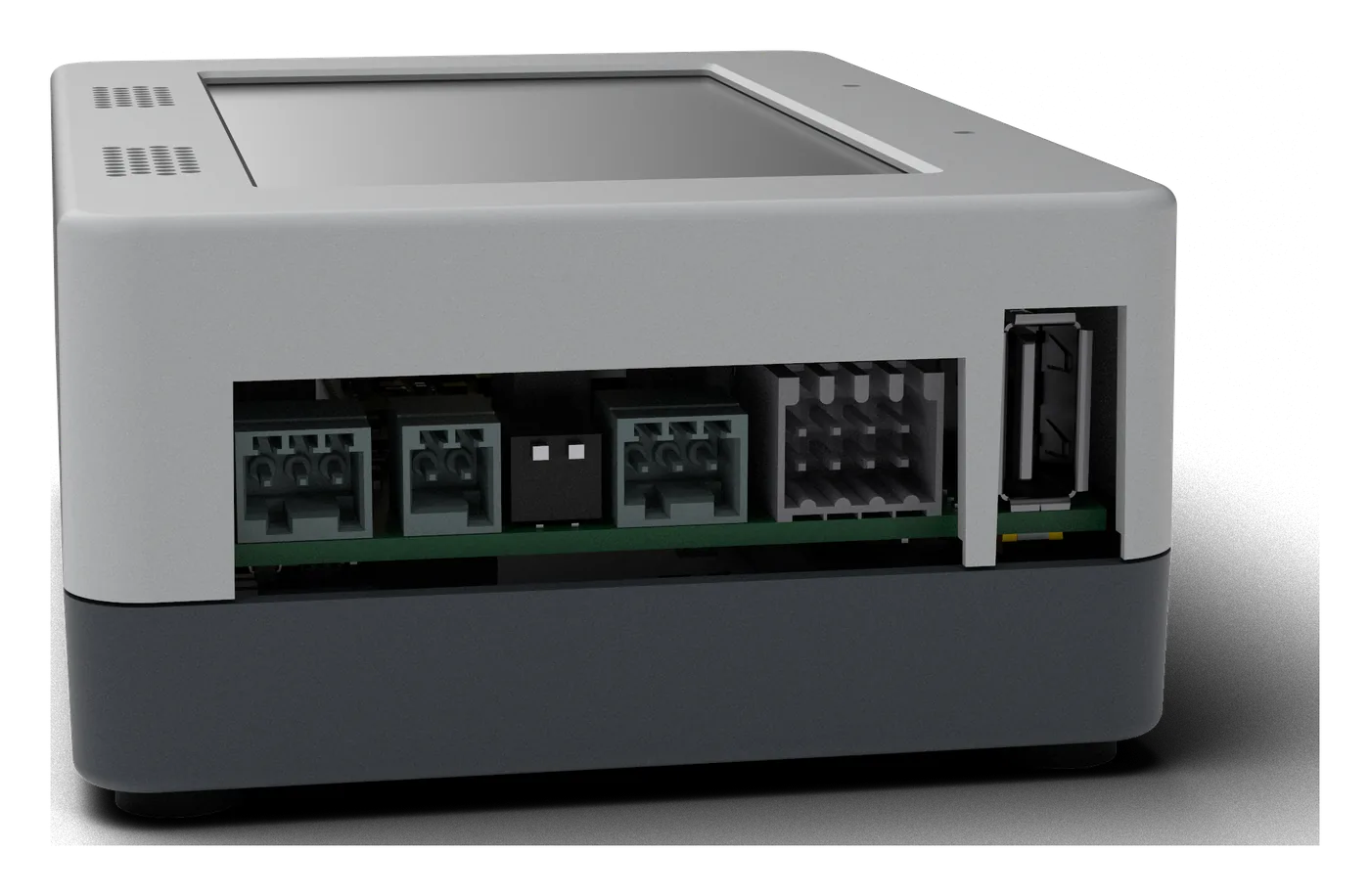 Render
- TTL bus-servo terminal5 V or input pass-through, current-limited (calculated).
- CAN FD terminalFunctionally isolated, with listen-only mode.
- Termination switchSet bus termination by hand.
- RS-485 terminalReceives by default, so you see the bus before you talk on it.
- RS-232 headerFor serial instruments; DB9 adapter cable in development.
- USB-A hostUSB 2.0, 0.5 A rated, switchable and current-sensed.
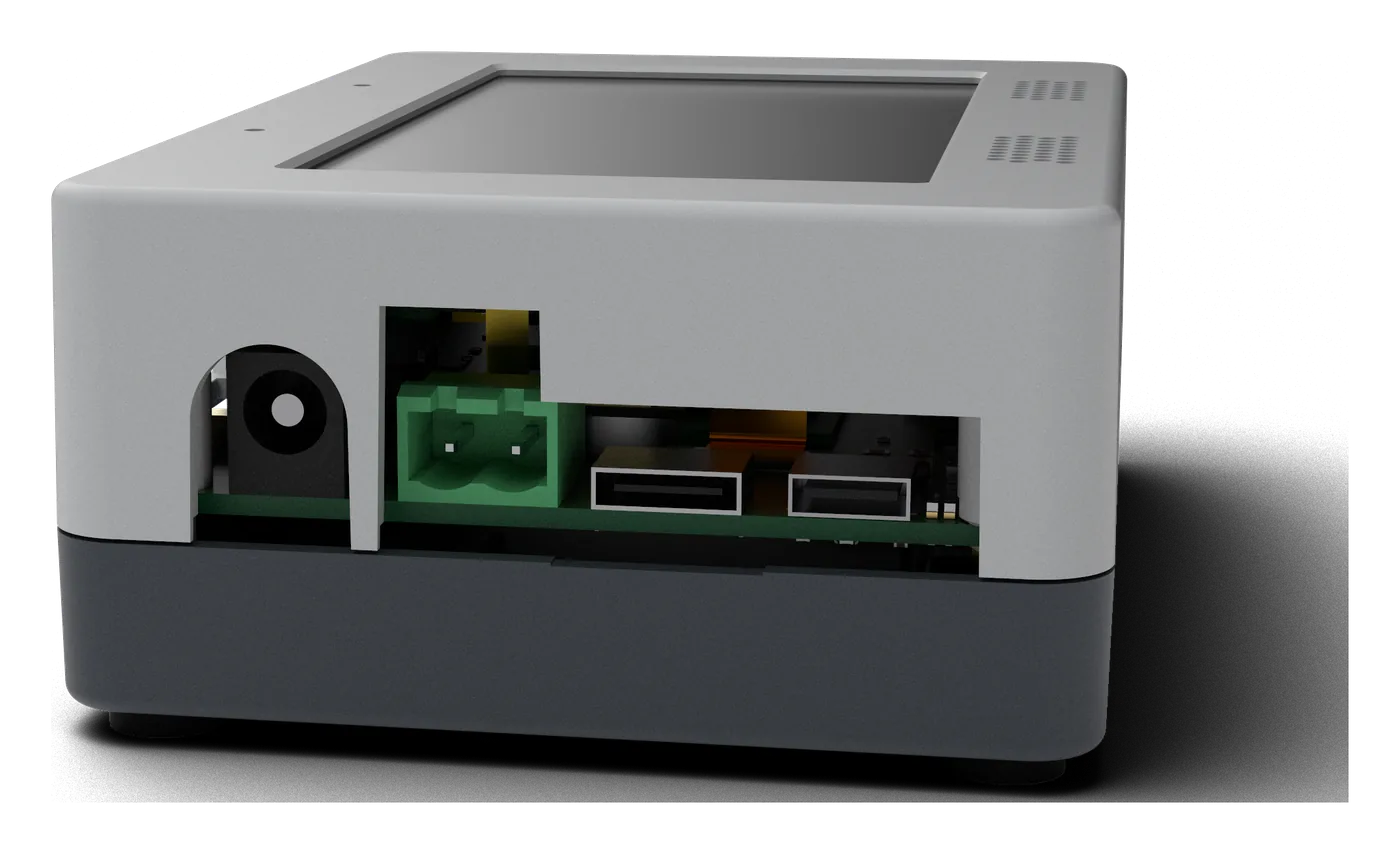 Render
- DC barrel jack5.5 × 2.5 mm, 6–26 V (design).
- DC input terminalSame input, wired in parallel. Use one at a time.
- mini-HDMIConnect an external display.
- USB-C service portSerial console or service mode; 5 V backup power (no PD).
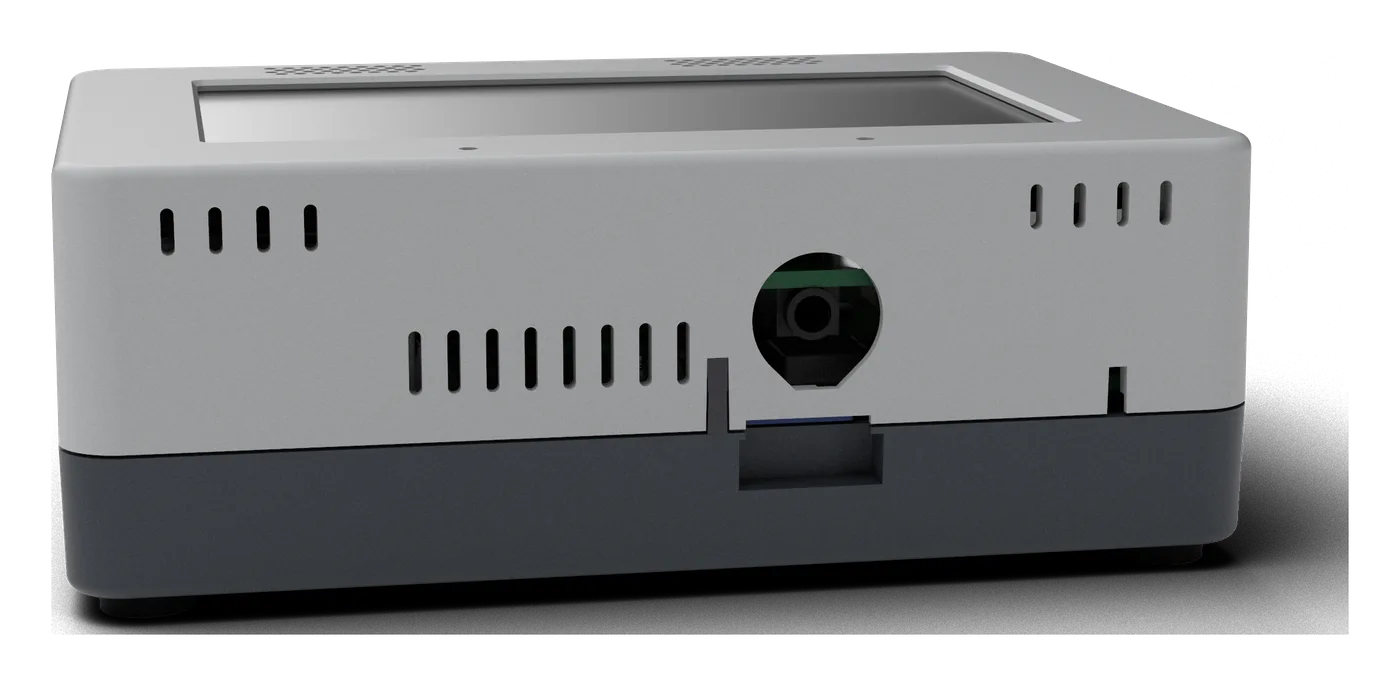 Render
- microSD slotBoot and storage.
- 3.5 mm headphone jackNext to the stereo speakers on the top cover.
- Antenna exitOptional external antenna; the on-board antenna is the default.
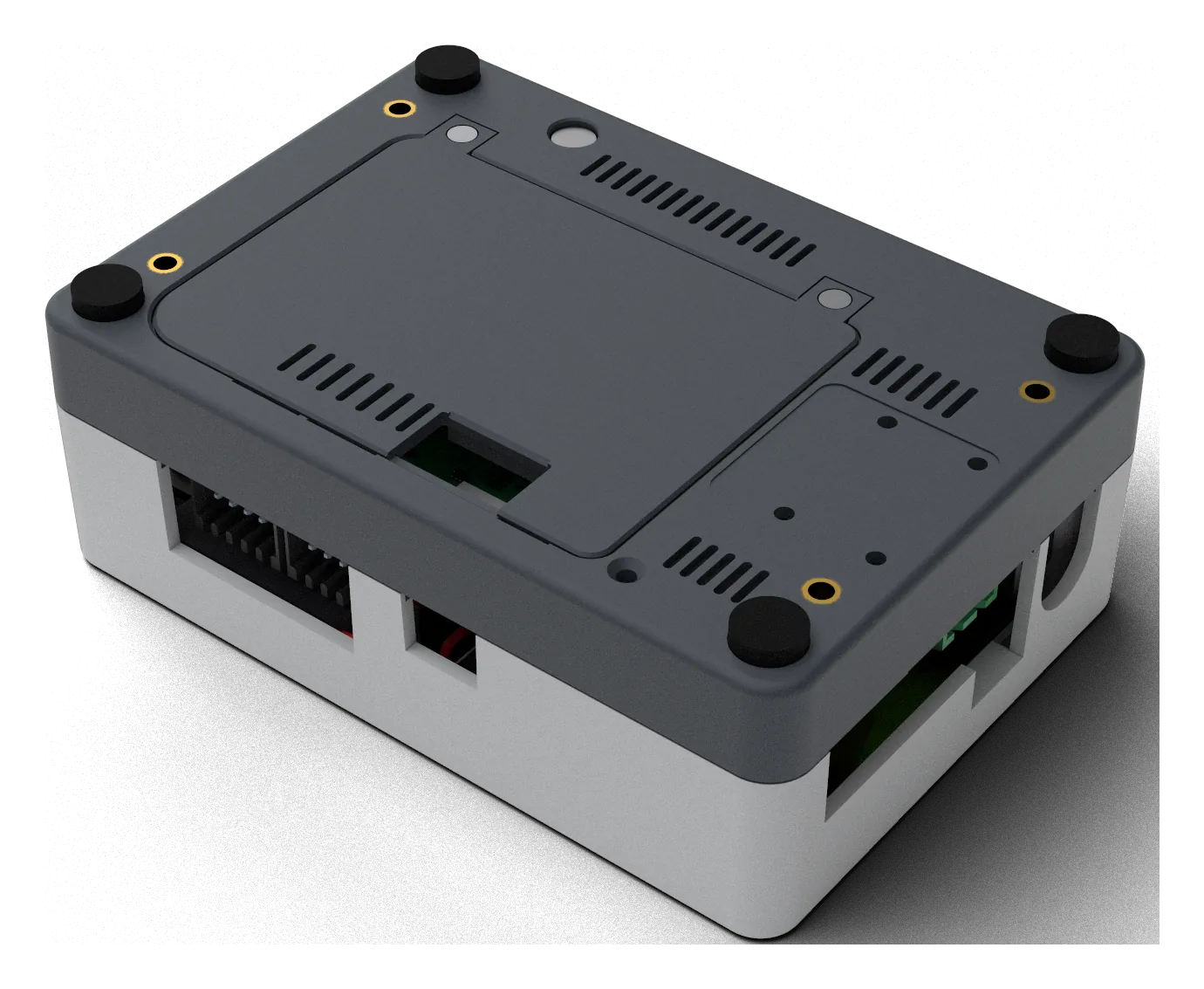
- Reset pin hole and vents
A Linux computer you can carry to the bench.
Underneath the ports is a complete, practical Linux machine: quad-core processor, touchscreen, Wi-Fi, speakers, microphones and a 6-axis motion sensor, in a 115 × 80 × 40 mm box (design).
- Quad-core Cortex-A53, 1 GHz, 512 MB · designed to run Raspberry Pi OS*
- 3.97-inch 480 × 800 capacitive touchscreen · set up Wi-Fi and see the device address without a PC (planned)
- Two microphones, stereo speakers, headphone jack
- Dual-band Wi-Fi module · rated 802.11ax by its maker, not yet verified
- Camera connector · camera sold separately
- 1S battery input · battery not included; buy a protected pouch cell locally
 Render
Probe, bus adapters and servo driver, together.
The debug ports give you programmable, current-limited target power with current sensing, target reset and software-selected protocols. Next to them sit functionally isolated field buses and a bus-servo port. One box, one power supply, one network address.
- 2 debug ports: JTAG, SWD, SPI, I2C, UART · open-source OpenOCD, board configuration in development
- 3.3 V / 5 V target power, about 0.3 A per port · calculated
- RS-485 and RS-232 in one isolation domain, CAN FD in another · functional isolation, not safety insulation
- Used over Wi-Fi · it is not a USB probe for your PC
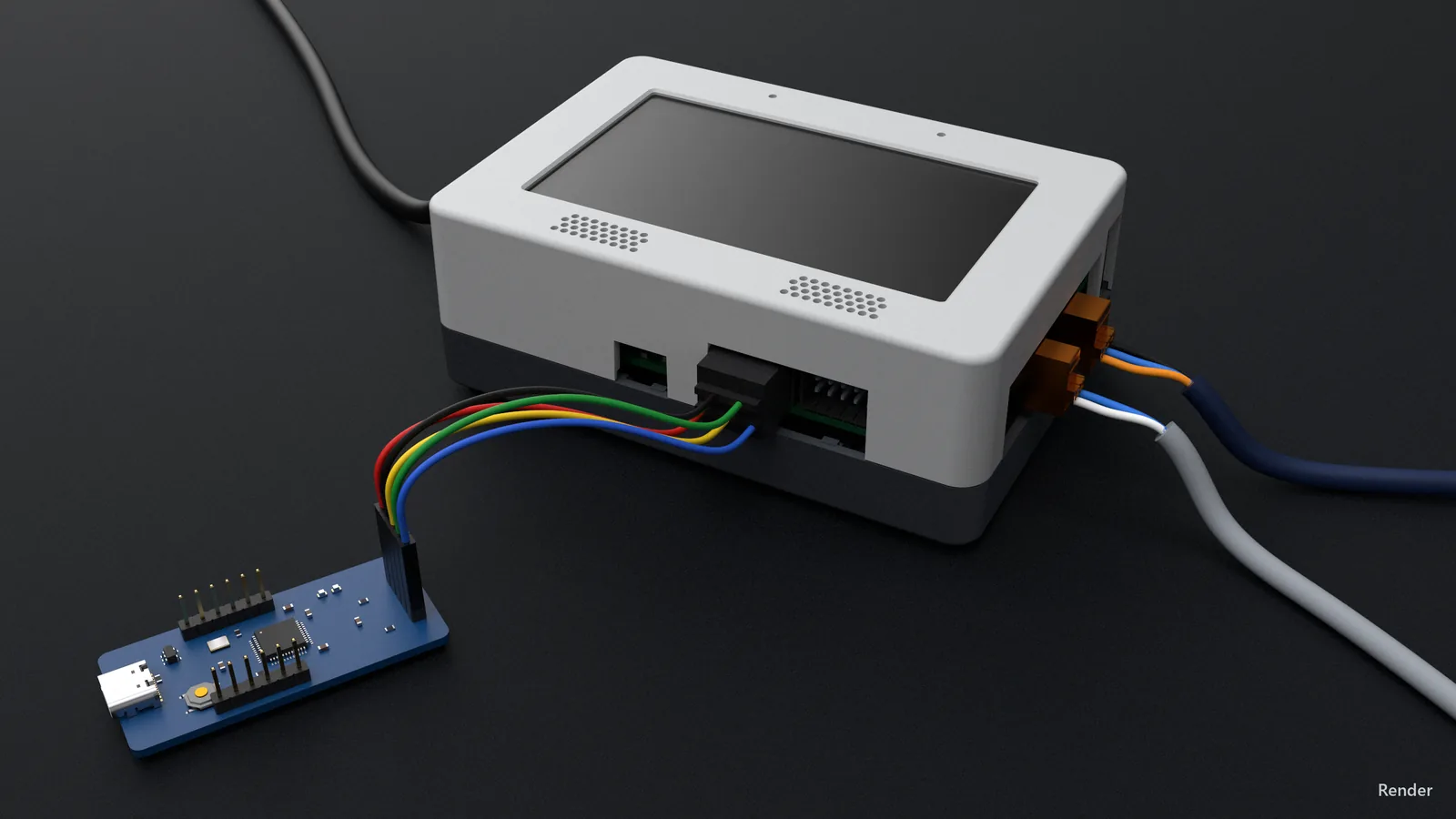
See the bus before you touch it.
RS-485 receives by default and CAN can run listen-only, so you see existing Modbus and CAN traffic before anything is sent. With a planned DB9 cable, the RS-232 port brings serial bench instruments onto Wi-Fi.
Design; software in development. For benches, indoor pilots and short field sessions, not permanent installation. Field devices need their own power supply.
The AI stays on your side.
H-Agent S1 doesn't contain an AI model. It gives the AI coding agent you already use documented hands on real hardware, and keeps you in charge of anything risky.
Markdown packs and a CLI
Markdown instruction packs and a command-line interface let your desktop AI agent drive the ports over SSH. The CLI and Python library also work without any agent. (In development.)
Risky actions wait for your OK
First power-up of a new target, the first switch to 5 V and transmitting on an unknown bus wait for confirmation on the touchscreen. (Planned.)
No account with us
No subscription. AI services are paid directly to your provider.
Opt-in only
Telemetry and update checks stay off until you opt in. The power co-processor can cut power to the mics and camera. (Planned / design.)
No default password
You set your own password at first boot. (Planned.)
On H-Agent S1
Touchscreen UI, port control with approval rules, power telemetry, photo capture. A wake word and small models may fit; to be measured. (Planned.)
Your computer or LAN server
Large language models, speech recognition and text-to-speech, vision models and firmware builds.
Your cloud account
LLM, speech and vision APIs with your own key. You pay your provider directly.
Planned architecture; software in development. Running large language models on the device is not claimed.
From the firmware bench to the robot desk.
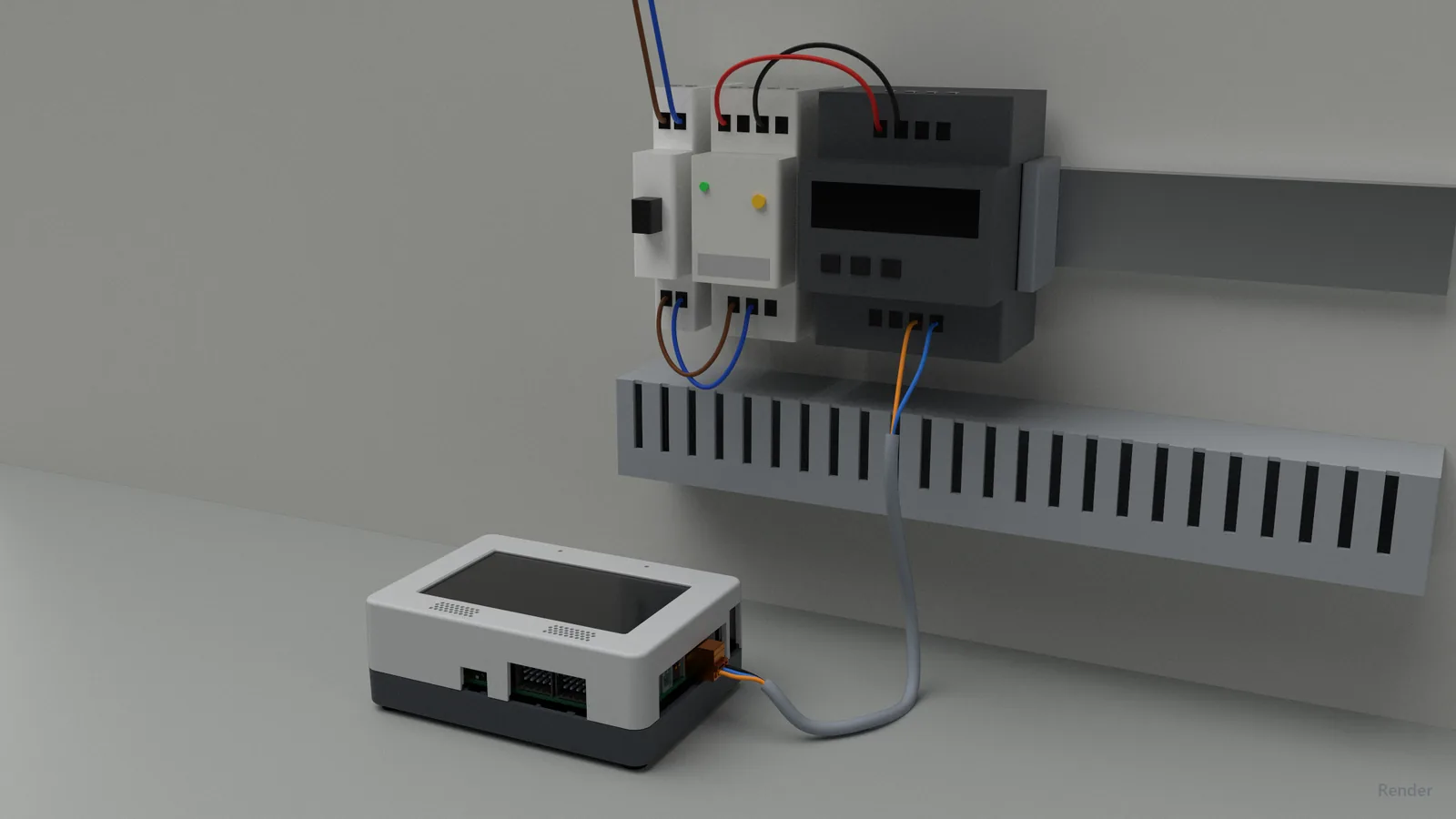
Four bench jobs it's designed for. The scenes are renders; the cables, panels and props are illustrative.
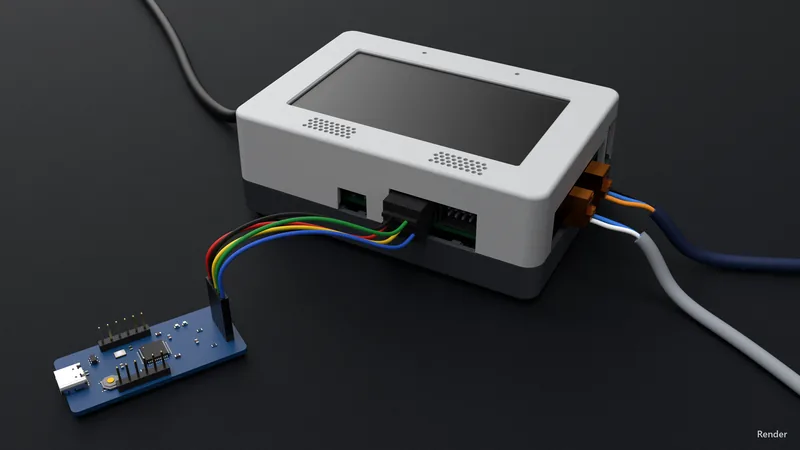
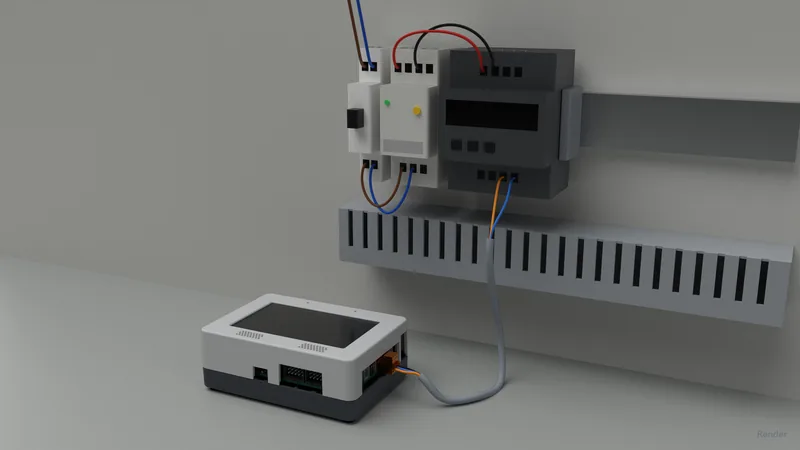
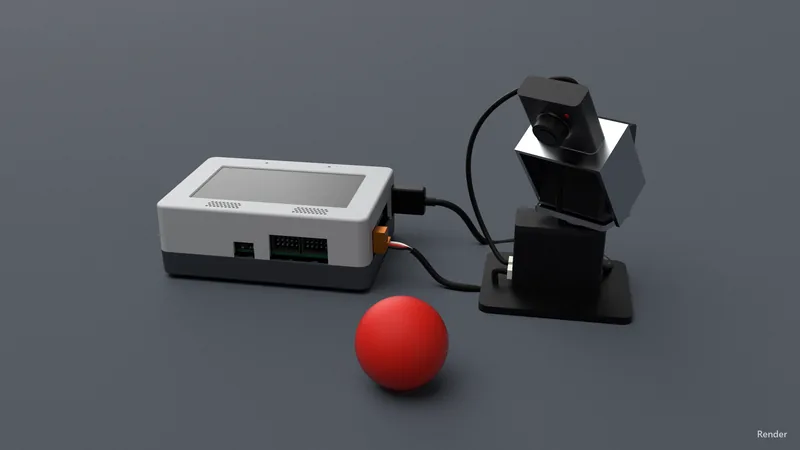
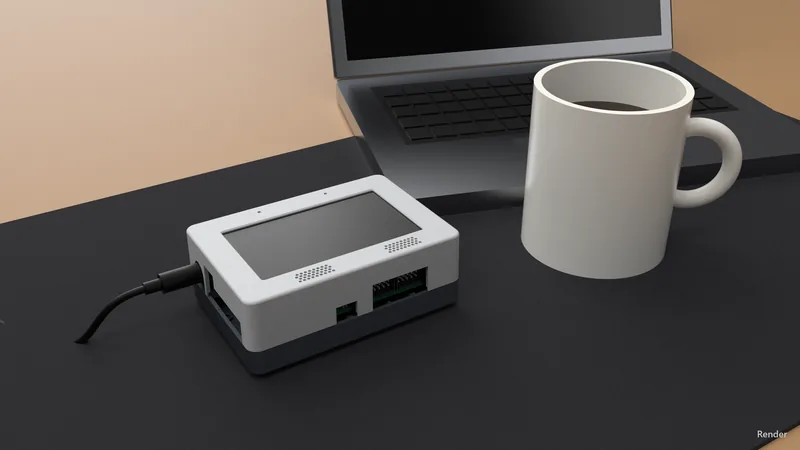
 Render
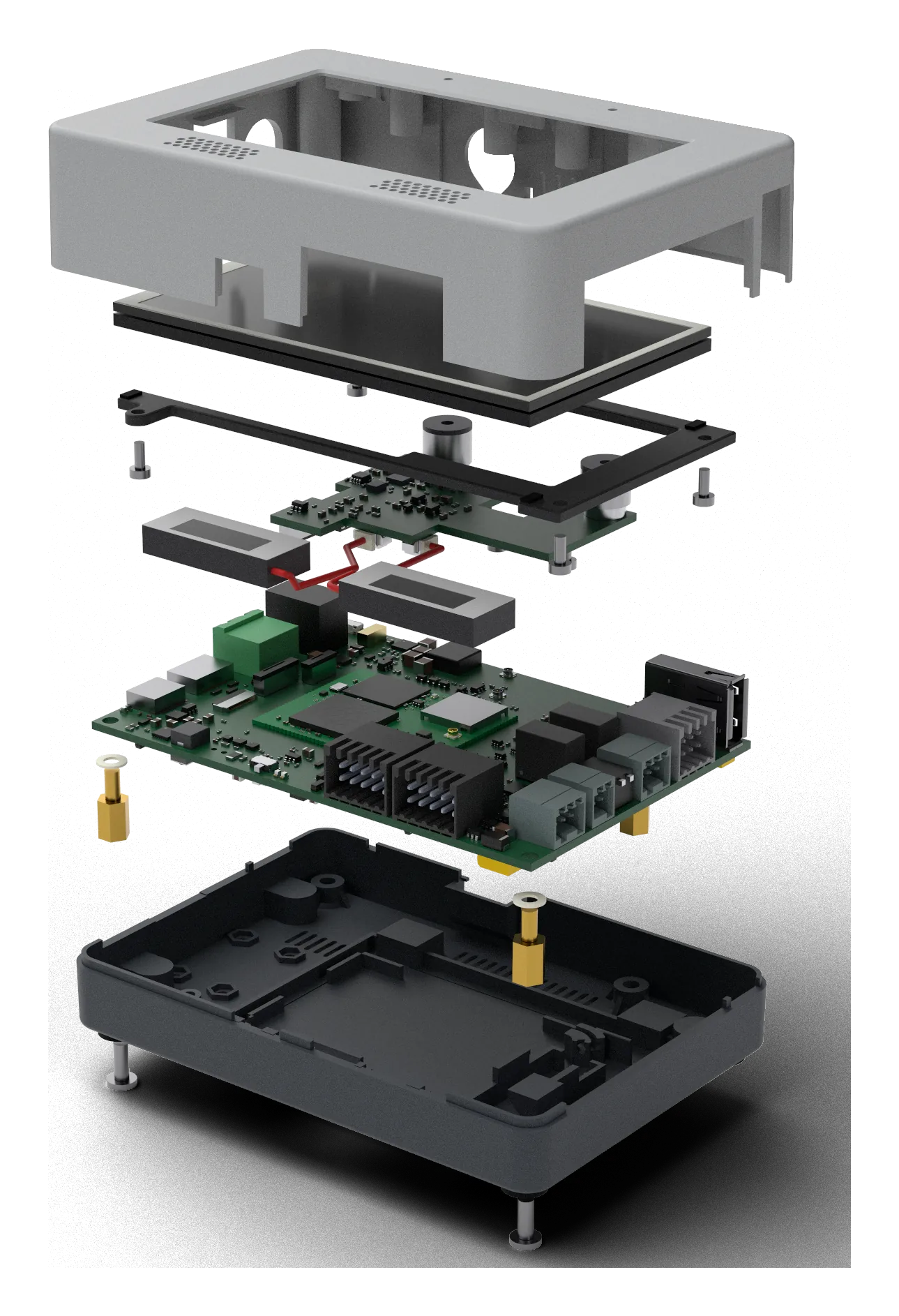
Two boards, one tidy stack.
A main board with the compute module, power system, debug and bus interfaces, and an audio board under the display. An always-on STM32 power co-processor watches input voltage, battery, temperature and per-port current, and can switch the Linux side off entirely.
- Input over-voltage, reverse-polarity, surge and current-limit protection · design, prototype testing pending
- High-risk outputs off at power-up; four outputs individually switchable with current sensing
- Four M3 inserts on the bottom, 100 × 45 mm apart · for 3D-printed mounts
The details.
Values are from the current design (main board rev 4e, audio board A2, enclosure v3r6). Calculated and datasheet figures are marked; measured values will follow prototype testing.
Compute
- Processor
- Quad-core Cortex-A53, 1 GHz (datasheet)
- Memory
- 512 MB
- Storage
- microSD boot
- OS
- Designed to run Raspberry Pi OS*
- Co-processor
- STM32 power and telemetry controller
Display & audio
- Touchscreen
- 3.97-inch, 480 × 800, MIPI DSI, capacitive touch (design)
- Video out
- mini-HDMI
- Audio
- 2 microphones, stereo speakers, 3.5 mm headphone jack (design)
- Camera
- CSI-2 connector; camera sold separately
Debug ports
- Ports
- 2 (port A shared with the servo port); custom pinout
- Protocols
- JTAG, SWD, SPI, I2C, UART (datasheet)
- Target power
- 3.3 V / 5 V, about 0.3 A per port (calculated)
- Current sensing
- About 0.4 mA resolution (design)
- Target I/O level
- 1.1–5.5 V, follows target reference (datasheet)
Functionally isolated buses
- RS-485
- Half-duplex, receive by default (design)
- RS-232
- 250 kbit/s guaranteed (datasheet)
- CAN FD
- Classic up to 1 Mbit/s, FD data phase up to 5 Mbit/s (datasheet); listen-only mode
- Isolation
- RS-485/RS-232 in one domain, CAN FD in another; functional isolation, not safety insulation
Bus-servo & USB
- Servo port
- TTL bus servos, 3.3 V half-duplex; 5 V (1.49 A limit) or input pass-through (2.98 A limit, needs ≥9.5 V input) (calculated)
- USB-A
- USB 2.0 host, 0.5 A rated, switchable
- USB-C
- Service port: serial console or service mode
Power, wireless & mechanical
- DC input
- 6–26 V (design); barrel jack or terminal
- Backup input
- USB-C 5 V (no PD)
- Battery
- 1S input with charger; battery not included
- Wireless
- Dual-band Wi-Fi module rated 802.11ax by its maker (not yet verified); Bluetooth hardware reserved
- Sensors
- 6-axis IMU; input, battery and per-port current monitoring
- Size
- 115 × 80 × 40.3 mm (design)
- Enclosure
- 3D-printed (prototype)
What it is not
Honest limits, so you can decide early.
Open-source release planned.
We plan to release schematics and KiCad files, the enclosure CAD, the STM32 firmware, and the device service, command-line tools and AI instruction packs. Licences will be named before launch. Third-party parts such as the compute module and the Wi-Fi module firmware are not open and will be listed in the docs.
- Schematics & KiCad PCB · licence to be decided
- Enclosure CAD & printable brackets
- STM32 firmware · signed release builds, unlockable
- CLI, Python library, Markdown packs
- Docs & test procedures
Where the project stands.
Updated as milestones land. Future dates are plans and will move if prototype testing finds problems.
Hardware design complete
Main board through its fourth revision (4e), audio board A2 and enclosure v3r6. Production files exported; renders from the CAD assembly.
Prototype boards
Order, assemble and power up the first boards, then run basic function tests. Target: by the end of November.
Bring-up and first demos
Linux, touchscreen, Wi-Fi, audio and camera running on real boards, then a first AI-in-the-loop debugging demo, docs v0 and a public repository.
Crowdfunding application
Apply to a crowdfunding platform for engineering hardware with working-prototype evidence.
Pre-launch page and enclosure first articles
Real photos replace renders; testers and reviewers get early units.
Campaign launch
A small production run for certification testing during the campaign, so shipping can start soon after it ends.
Be there when the first board powers up.
Build notes cover what we built, what we measured and what's next, plus the road to the campaign. Nothing here is for sale: no orders, deposits or reservations.
* Raspberry Pi is a trademark of Raspberry Pi Ltd.